
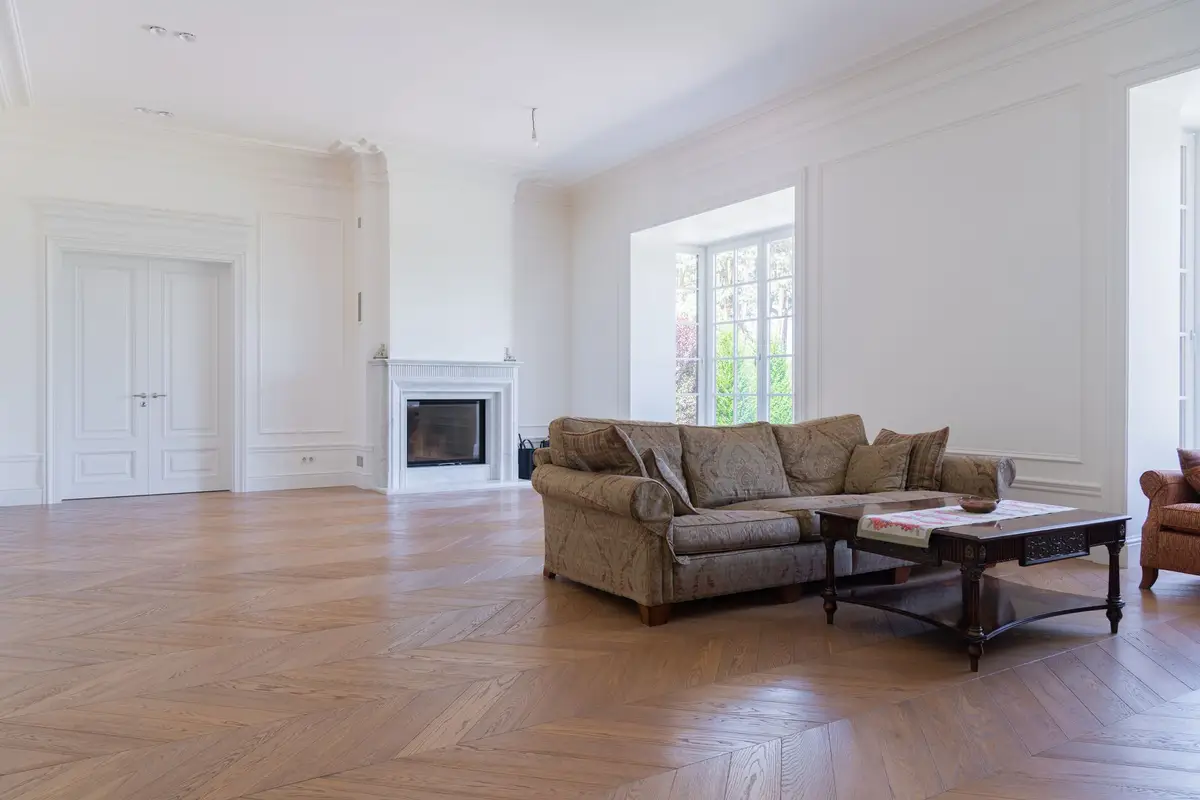
Flooring Installation in Kyle, TX
New floors laid on a flat, dry, prepared subfloor, with layouts planned so the seams, edges and transitions look intentional.
- Subfloor prep included in the plan
- Nearly 25 years in construction
- Kyle, TX based
A floor is only as good as what is under it
New flooring does not hide a bad subfloor. It shows it. A dip in the slab becomes a bouncy plank. A damp spot becomes a cupped board. A high joint becomes a ridge you feel through your socks. The real work in a flooring job is the preparation: checking flatness, dealing with moisture, and planning where each row starts and ends so you are not left with a thin sliver along one wall.
Most Kyle-area homes sit on a concrete slab, which shapes every flooring decision. Slabs can carry moisture vapor from the soil beneath, and clay soil movement can leave slabs with slight dips or cracks. Wood and many floating floors need that moisture to be controlled with the right underlayment, and tile needs a stable, flat surface so it does not crack. Humidity swings between summer and winter also make expansion gaps around the edges more important than they look.
Because we work across drywall, painting and remodeling, flooring is scheduled alongside them. New floors usually go in after walls are finished and painted, and baseboards go on last to cover edges. That sequence matters when flooring is part of a larger remodel, such as a kitchen or a whole-house update. For a specific floating product, see our laminate flooring page.
When it is time to replace your floors
- Boards, planks or tiles are cracked, cupped, lifting or separating.
- The floor feels uneven, soft or bouncy underfoot in certain spots.
- Carpet holds stains, odors or allergens and no longer cleans up.
- Water damage from a leak has left discoloration or swelling.
- Different flooring types meet awkwardly from room to room and you want a continuous look.
- You are finishing a remodel and the floor has to match the new walls and cabinets.
How a flooring installation is done
- Inspect the subfloor. We check flatness, moisture and condition, and note any cracks, dips or damage that must be handled before anything goes down.
- Prepare the surface. Old flooring is removed, the subfloor is cleaned, patched or leveled as needed, and the right underlayment is chosen for the material.
- Plan the layout. Rows are laid out from the center or the most visible line, so cuts at the edges look balanced and doorways line up.
- Install the floor. Planks, tiles or boards are laid with the proper expansion gaps and fastening or adhesive for the product.
- Finish the edges. Transitions, thresholds and baseboards are fitted, and the floor is cleaned and checked.
What drives the cost of flooring installation
The material is only part of the price. The preparation and the pattern change the labor a lot. The main factors:
- Type of flooring. Tile, wood, vinyl plank and laminate each take different skills and time.
- Subfloor condition. Leveling a dipped slab or repairing damaged boards adds work before installation.
- Removal of old flooring. Pulling tile or glued-down carpet is slower than lifting a floating floor.
- Room shape. Angles, closets and many doorways add cuts and waste.
- Pattern and transitions. Diagonal or herringbone layouts and many threshold pieces cost more than straight runs.
Why homeowners choose us for flooring
Dario Dieguez has nearly 25 years of experience in construction and remodeling, and flooring is part of the same sequence as walls, paint and trim. We care about the base as much as the surface.
That means a flat, dry subfloor, correct expansion gaps and transitions that look finished. Call (512) 227-7360 with your room list and flooring choice.
Flooring installation questions
Can new flooring go over my old floor?
Sometimes. Floating floors can often go over a flat, firm existing surface, but soft, damaged or uneven flooring needs to come out first. Heavy glued-down material and carpet usually need removal for a clean result.
Does moisture in a concrete slab matter?
Yes. Slabs can release moisture vapor, which damages wood and some other floors from underneath. The right moisture barrier or underlayment matters, and we check conditions before choosing a product.
How long does flooring installation take?
A single room can be done in a day or two. Whole-house projects, tile with curing time and floors that need leveling take longer, and furniture moves add to the schedule.
Should flooring be installed before or after painting?
In most remodels, walls are painted first and flooring goes in after, with baseboards installed last. This avoids paint splatter on new floors and gives a cleaner edge.
Why do you leave a gap around the edge of the floor?
Floors expand and contract with temperature and humidity. The gap gives them room to move and is hidden by baseboards or trim. Without it, floors can buckle in humid weather.
Related flooring and remodeling services
Part of our Flooring work.
Ready for new floors?
Call Dario or send the rooms and the flooring you have in mind.