Drywall Installation in Kyle, TX
New walls and ceilings hung square, fastened correctly and ready to finish, for additions, garage conversions, finished attics and remodels.
- Hanging + finishing under one roof
- Nearly 25 years in construction
- Kyle, TX based
New drywall, hung so the finishing goes smoothly
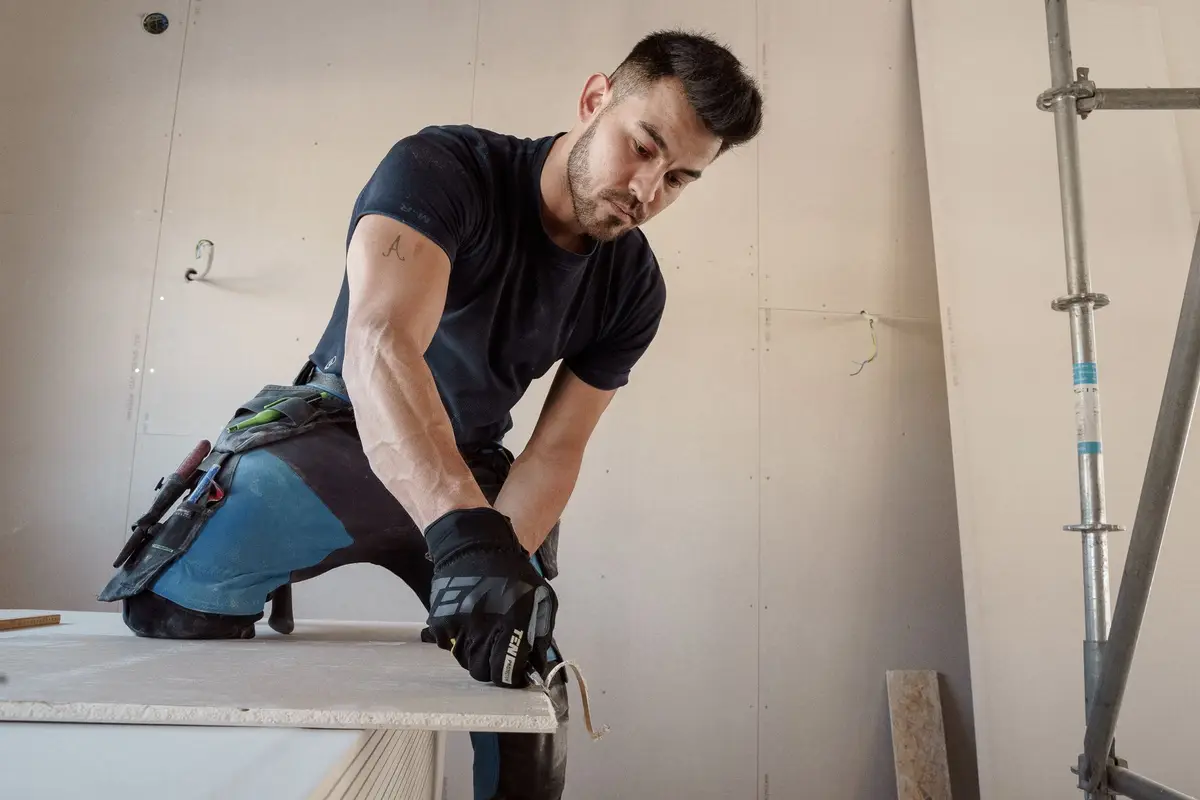
Installation is the step every other drywall task depends on. When sheets are hung with wide gaps, loose screws or crooked framing behind them, the finisher spends the rest of the job fighting those mistakes, and they tend to come back as cracks and ghosting a year later. Hanging drywall properly means checking the framing first, planning seams so they land on studs, and setting screws just below the paper surface without tearing it.
Around Kyle, most calls for new drywall come from four situations: garages being turned into living space, room additions and finished attics, remodels where walls were moved or opened up, and damaged sections that are too far gone to patch after water or pest damage. Each one has its own wrinkles, from matching existing ceiling heights to the thicker board that building codes typically ask for between an attached garage and the house.
Dario Dieguez has worked in construction and remodeling for nearly 25 years, so installation is planned as one step in a longer sequence: framing and mechanicals first, then board, then taping and finishing, texture and paint. If other trades are on your project, the schedule is worked out with you rather than around you.
When you need new drywall, not a patch
- You are finishing a garage, attic or room addition and the framing is open and ready to be covered.
- Walls were opened up for plumbing, electrical or HVAC work and need to be closed, not just patched.
- Water or pest damage has spread beyond a patch and a full section of wall or ceiling feels soft or crumbles.
- A remodel moved a wall, added a doorway or widened an opening, leaving bare studs.
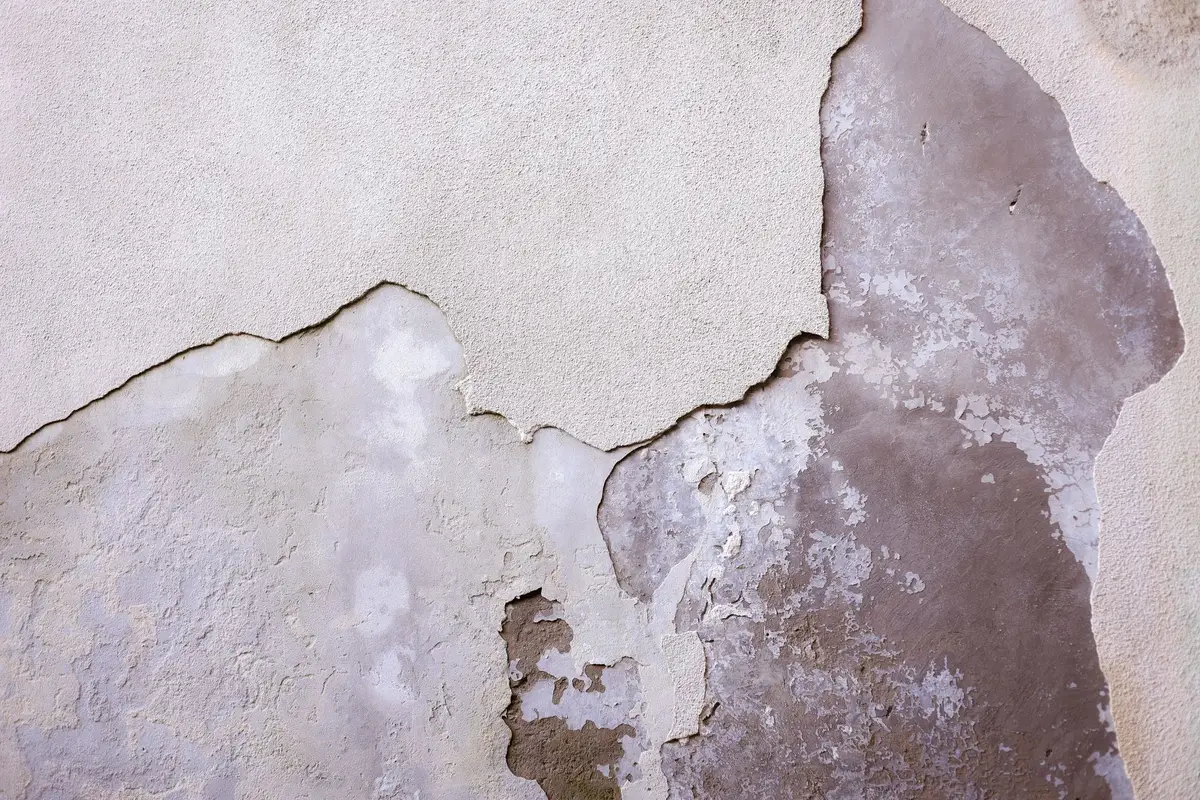
- Old plaster or wood paneling is coming out and you want flat, paintable walls in its place.
- A ceiling is sagging, or screws are popping across an entire room instead of in one spot.
How drywall installation actually goes
- Check the framing. Studs and joists are checked for straightness and spacing. Bowed studs and missing blocking get flagged before any board goes up, because they cannot be corrected afterward.
- Plan the layout. Sheets are laid out so seams land on framing and stay off high-stress spots such as the corners above doors and windows.
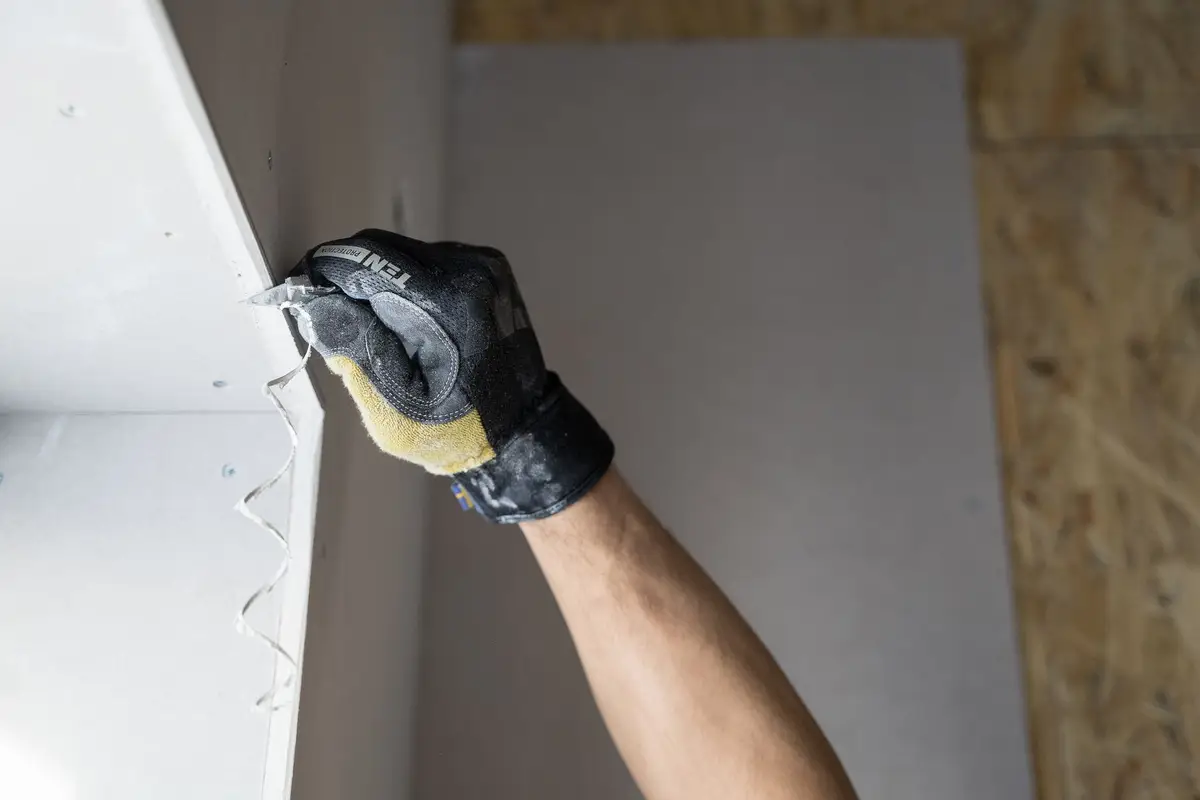
- Hang ceilings first, then walls. Ceiling board goes up first so wall sheets can support its edges. Screws are driven to the proper depth, not nailed and not overdriven.
- Handle the details. Metal bead goes on outside corners, openings are cut for boxes and vents, and moisture-resistant or fire-rated board is used where the room calls for it.
- Hand off to finishing. Installation ends with a walk-through of every seam and corner, then taping, texture and paint follow in sequence.
What drives the cost of drywall installation
Installation is priced on the size and complexity of the space, not a flat number per room, so a quote follows a look at the framing. These are the factors that move it:
- Square footage and ceiling height. Nine-foot walls are routine; vaulted and tall ceilings need lifts and more hands.
- Board type. Standard half-inch, five-eighths-inch fire-rated board, or moisture-resistant board for baths and laundry rooms each cost differently.
- Cuts and corners. Many windows, soffits, niches and angled walls slow the work much more than a plain rectangular room.
- Access. Upstairs rooms, narrow stairs and tight attics add carrying time.
- How far the job goes. Hanging only, or hanging plus taping, texture and paint.
Why homeowners call us for drywall installation
Drywall is the trade this company is named for. The same crew that hangs the board also finishes it, so nobody is blaming the previous trade for a seam that will not disappear under paint.
The company works out of Kyle, so there is a short drive to Buda, San Marcos and the rest of Hays County, and you can call Dario directly at (512) 227-7360.
Where we hang drywall
Based in Kyle, we install drywall for homeowners here first, and in nearby Buda and other Hays County neighborhoods along I-35.
Drywall installation questions
Do I need five-eighths-inch drywall or will half-inch do?
Half-inch board is standard for most interior walls. Five-eighths-inch fire-rated board is generally used on ceilings under living space and on walls between an attached garage and the house, and your local building department has the final say. Tell us what the room is and we will tell you which board the job calls for.
Can new drywall go over old paneling or plaster?
Sometimes, but it depends on what is behind it. Loose plaster, uneven paneling or any moisture damage is better removed first so the new board lies flat. Looking at the wall in person is the only way to know.
How long does drywall installation take?
Hanging a typical room is usually a day or two. Taping and texture add separate coats with drying time between them, and humidity in Central Texas can stretch that, so the full sequence runs longer than the hanging alone.
Do I need a permit to hang drywall?
Drywall by itself usually does not need one, but a garage conversion, addition or structural change typically does, and an inspector may need to see framing and insulation before it is covered. Check with your city building department before the board goes up.
Can you work around other trades on my project?
Yes. Drywall sits between the rough-in trades and the finish trades, so we schedule around the electrician, plumber and painter instead of making you coordinate everyone.
Planning new walls or ceilings?
Call Dario or send the details of your room and we will talk through the job with you.